01
Is a sawfish a shark?
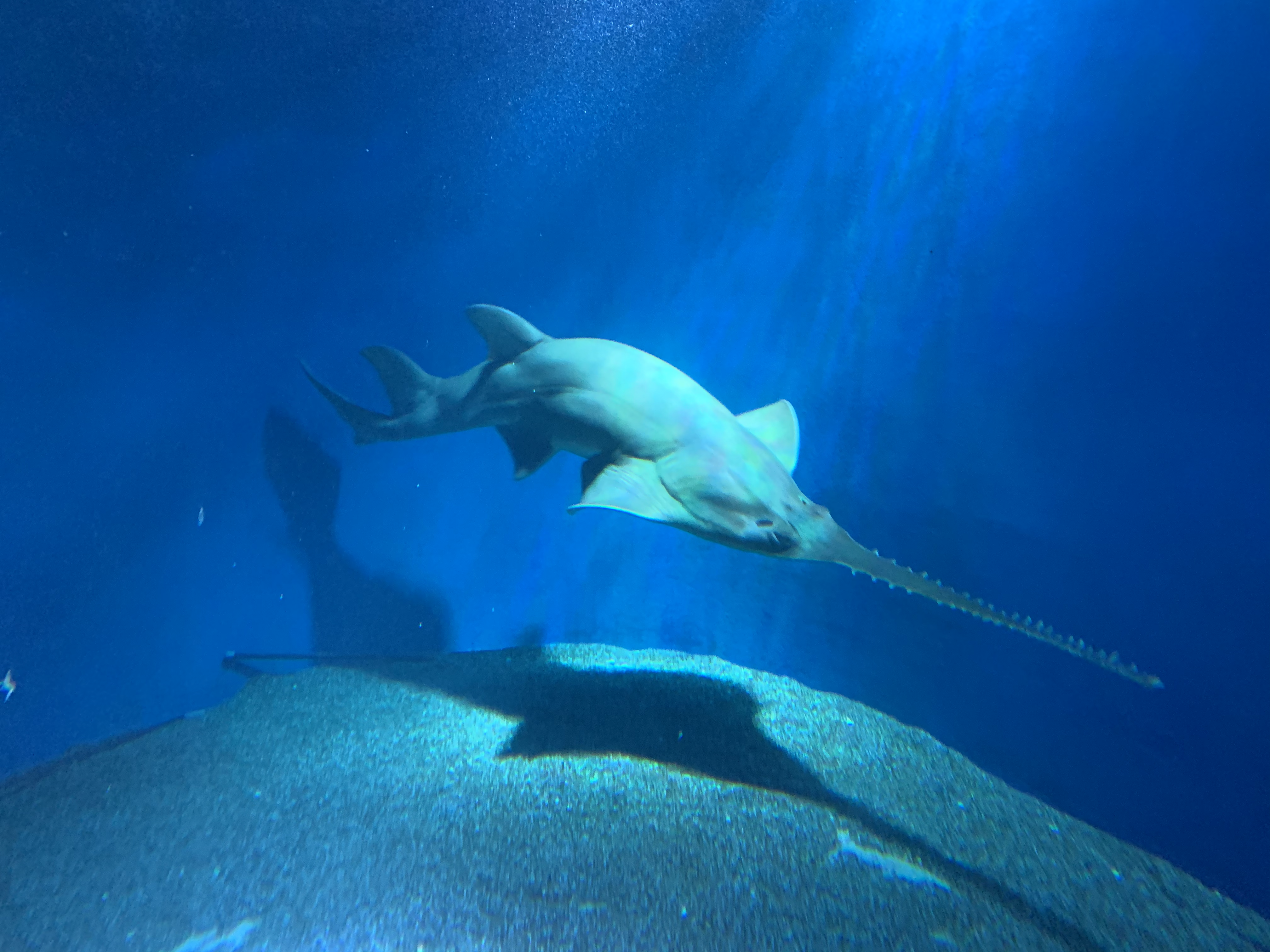
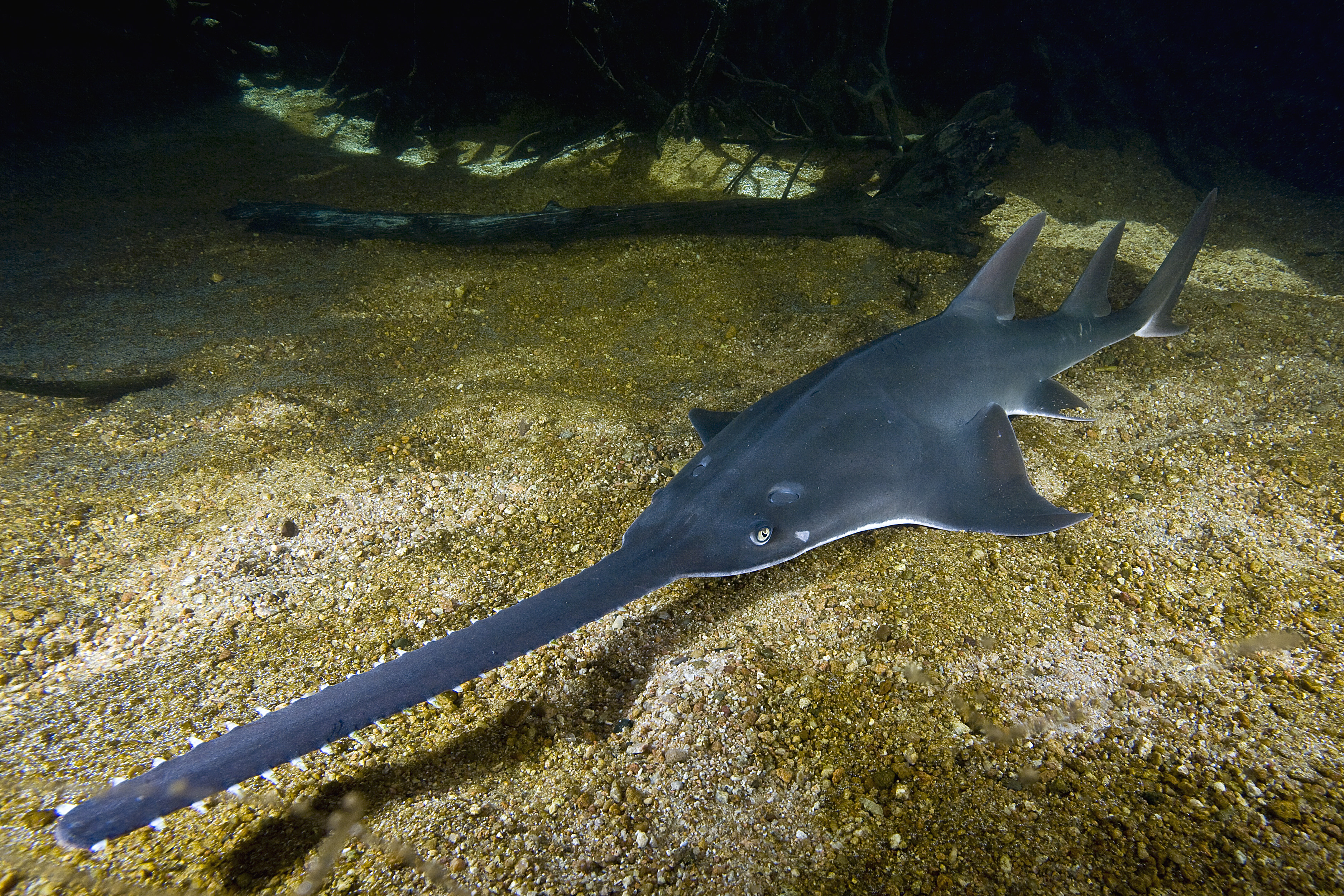
No. Sawfish are cartilaginous rays despite their shark-like outline. Their mouth and gill slits sit underneath the body, with broad pectoral fins beside the head.
Sawsharks are different animals: their gills are on the sides of the head and they have whisker-like barbels on the saw. A similar silhouette does not make them the same family.
02
What is the saw for?
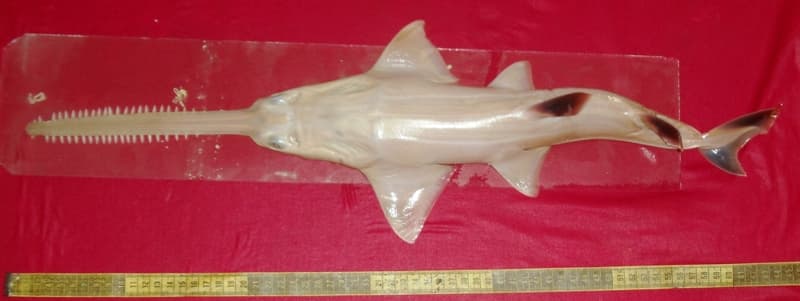
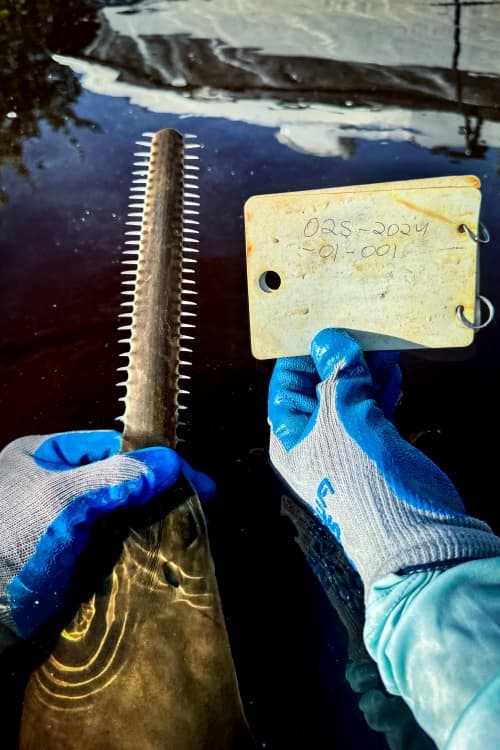
The rostrum is a long, flattened extension of the head. The projections along its edges resemble teeth but differ from teeth inside the mouth. It serves in feeding and can also be used defensively.
Sideways sweeps can stun small fish. Sensory receptors help locate prey. The eyes sit on top of the head, with openings behind them that allow water to reach the gills while the animal rests on the bottom.
03
Where do sawfish live?
Sawfish are associated with warm coasts, estuaries and shallow water. Habitat use varies by species and life stage; they do not all live in the same way.
Largetooth sawfish, also called freshwater sawfish, can use rivers. Young smalltooth sawfish rely on shallow areas alongside mangroves. Protecting these nursery habitats matters as much as protecting individual fish.
04
What do they eat?
Their prey includes small fish and invertebrates. The saw helps find and handle prey; it is not a mouth or jaw. Food is taken into the mouth on the underside of the head.
05
How do they reproduce?
Sawfish give birth to live young. In smalltooth sawfish, embryos receive nourishment from yolk sacs inside the mother. A soft sheath covers the saw at birth to protect her.
NOAA reports litters of 7–14 pups for this species, each about 60 centimetres long. Maturity can begin around seven years, and gestation is thought to last about a year. These figures describe smalltooth sawfish, not every sawfish species.
06
How big and how old?
Size varies substantially. The Florida Museum reports a maximum of about 7.3 metres for green sawfish and about 3.1 metres for dwarf sawfish. These are maximum reported sizes, not typical lengths for every animal.
Some species can live for decades; estimates for green sawfish exceed fifty years. Studying rare animals is difficult, and our understanding of their life histories continues to develop.
07
Why do they need protection?
A reassessment of all five species concluded in December 2023. A 2024 update from the IUCN SSC Shark Specialist Group reported that all five are globally Critically Endangered.
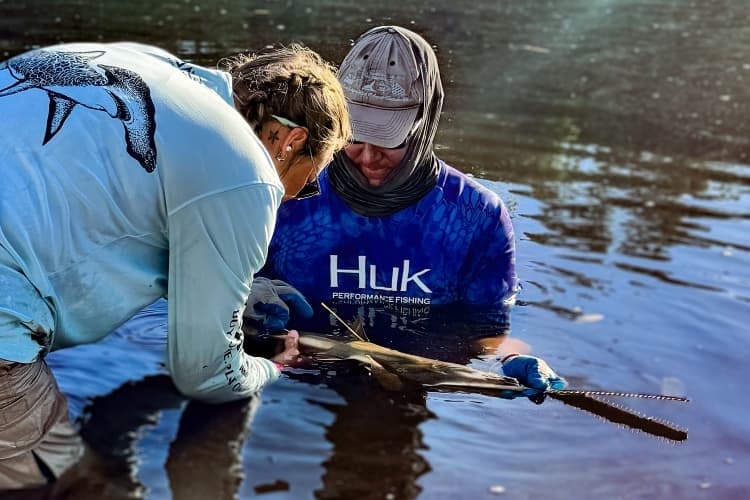
The saw readily becomes entangled in fishing gear. Habitat loss and slow reproduction in some species make recovery harder. Protecting rivers and mangroves, reducing accidental capture and documenting sightings can support conservation.

_in_Aqua_park.png)

_in_Aqua_park.png)
