01
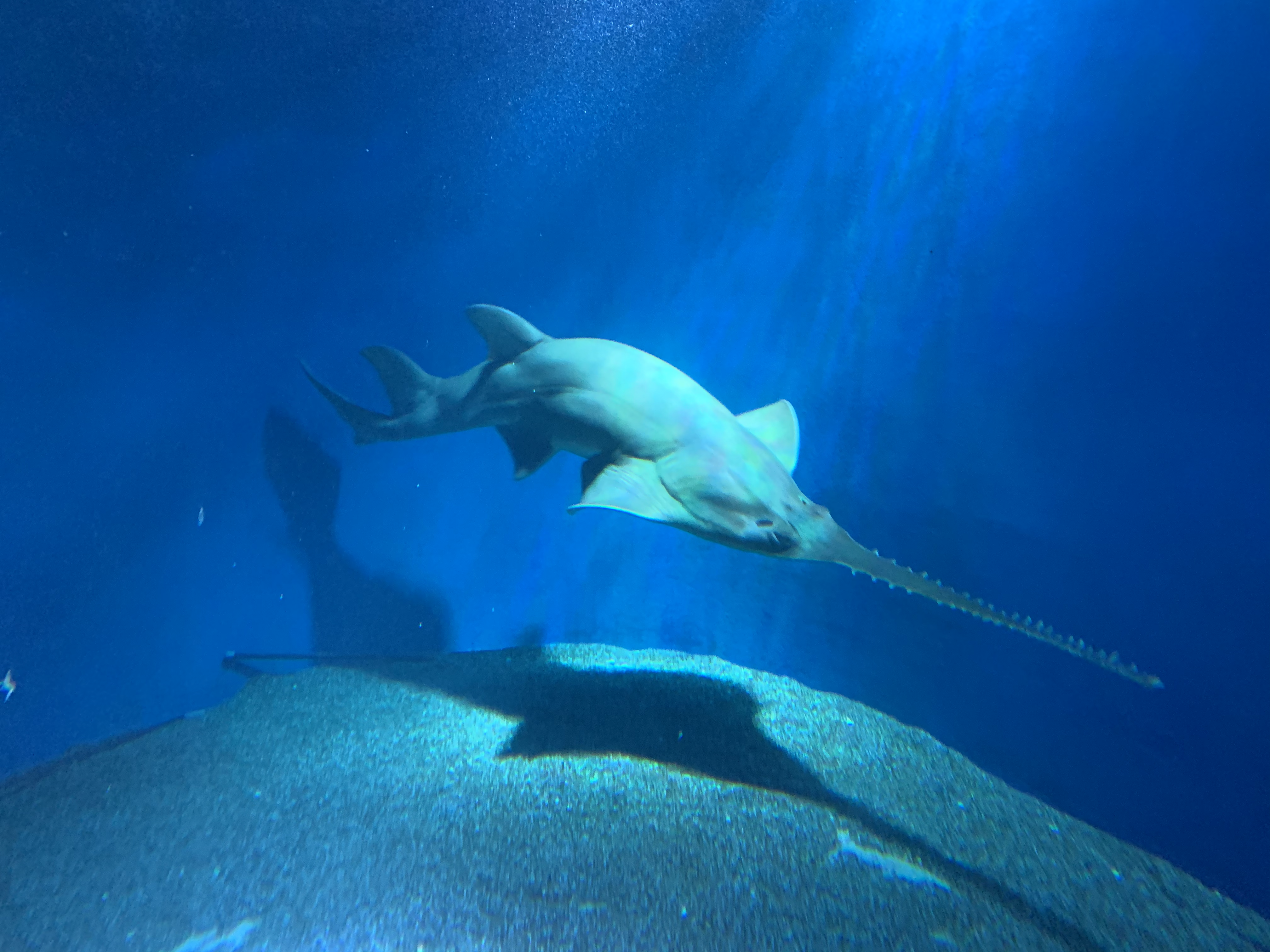
A distinctive long saw
The back is olive to greenish-brown and the underside pale. Gaps between rostral teeth widen towards the head. Colour alone is unreliable; rostrum shape and fin position help distinguish the species.
02
Remaining habitats
Historically distributed across the Indo-West Pacific, it retains important habitat along northern Australia. It uses coasts and estuaries with sandy or muddy bottoms. Suitable habitat does not, by itself, confirm recent presence.
03
One of the largest
Queensland's guide gives a maximum of 7.3 metres, with fish over 6 metres rare. Florida Museum cites lifespan estimates exceeding fifty years; published estimates vary and are not measured ages for every animal.
04
What does it eat?
Direct dietary information is limited. Small fish, squid and crustaceans are considered likely prey, rather than a fully documented menu for every population.
05
The start of life
NOAA reports live birth with up to 12 pups and estimated maturity around nine years. Florida Museum lists gestation as unresolved; a largetooth sawfish pregnancy estimate should not be substituted for this species.
06
Protecting its coast
Fishing-gear entanglement and habitat loss are major threats. Safeguarding juvenile coastal and estuarine habitats, alongside reducing accidental capture, matters for this long-lived species.
Global conservation status
Critically Endangered
Global IUCN category; local legal classifications may differ.
IUCN SSC Shark Specialist Group · 2024 ↗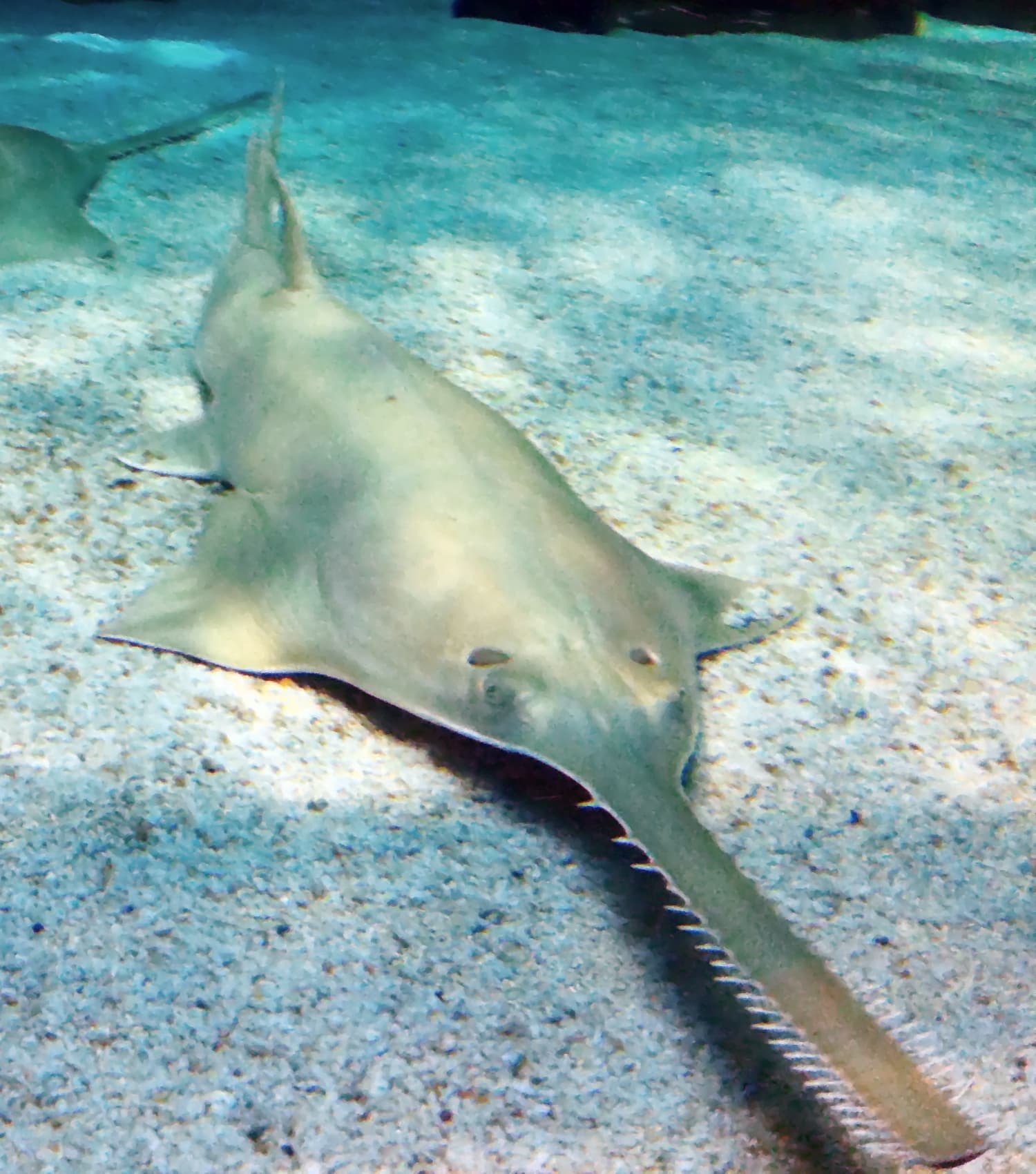
_in_Aqua_park.png)
