16.1° S / 124.3° EPRISTIDAE / RANGE
Global lifeboat
Kimberley coast
Northern Australia is the most important surviving multi-species refuge on Earth.
SPECIES EVIDENCE4

A visual guide to sawfish conservation
Not a shark, but a rare ray that uses its saw to sense prey. Five species remain, and every one is Critically Endangered.
Sawfish are not sharks.
A flattened head, broad pectoral fins, and a rostrum covered in sensory receptors. This body is adapted to rivers, estuaries, and shallow coasts.
Remaining habitat / 01
Explore selected regions with sawfish records or conservation importance. Points are approximate regional centres, not an exhaustive range map or live animal positions.
REGIONAL LOCATIONS — APPROXIMATE
08 / 08 ZONESGlobal lifeboat
Northern Australia is the most important surviving multi-species refuge on Earth.
SELECT A REGION
Drag the globe and select a region — no marker does not mean the species is absent
The sixth sense / 02
Sensory pores along the rostrum detect electrical signals from animals hidden in the sediment.
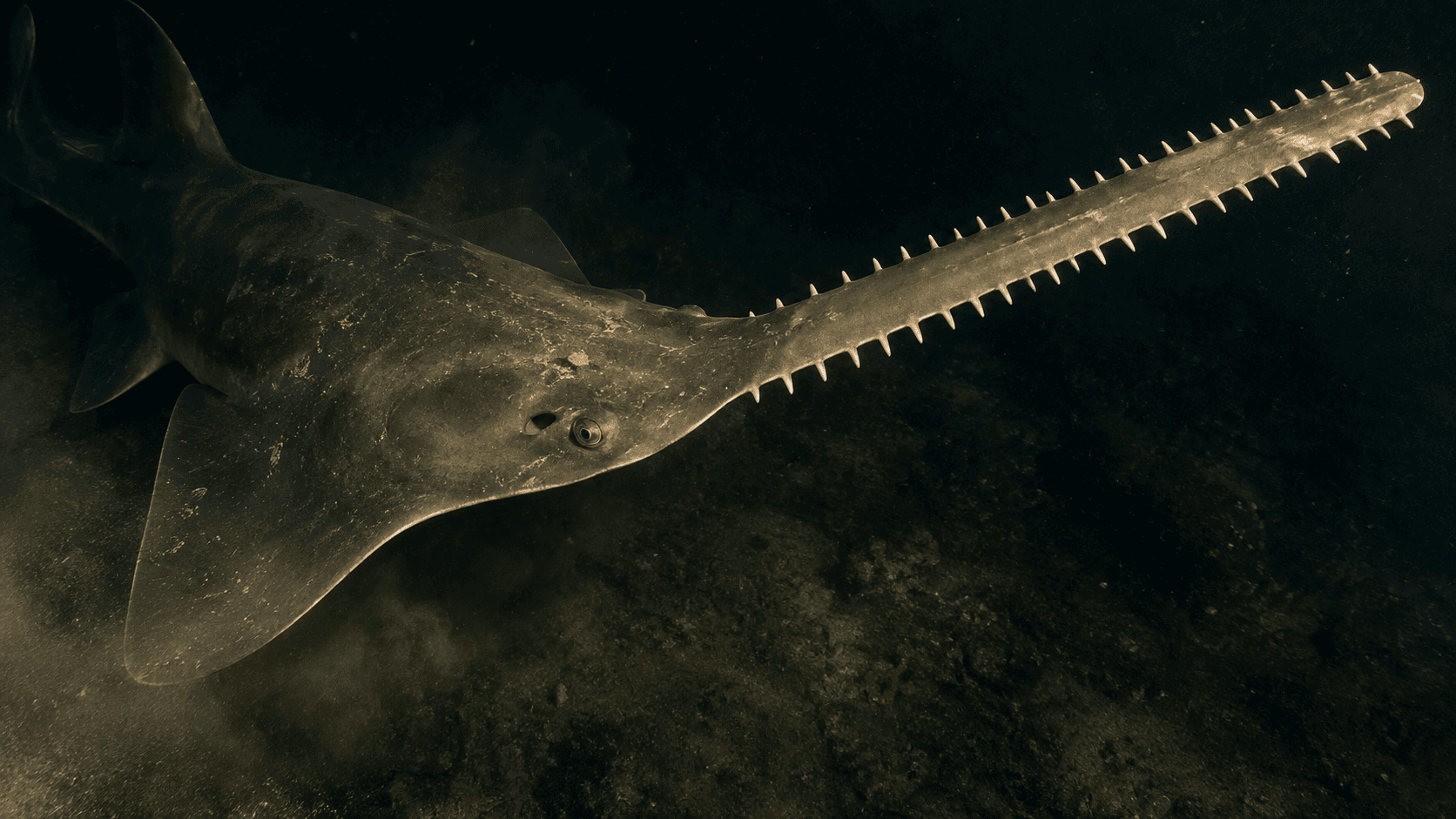
Fine sensory pores read the electric fields produced by muscles and nerves.
The last five / 03
Only five living species remain. Every one is now assessed as Critically Endangered.
Emergency / 04
historic global population decline
of former coastal range has gone quiet
The saw made to sense prey tangles easily in fishing gear.
Mangroves and river mouths shelter the first years of life.
The next record / 05
Protecting estuaries, reducing net mortality, and recording encounters are direct actions that give populations a real chance to recover.
Explore the global recovery strategy↗