01
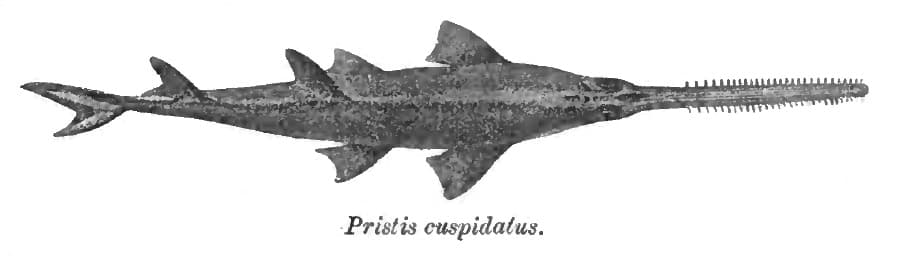
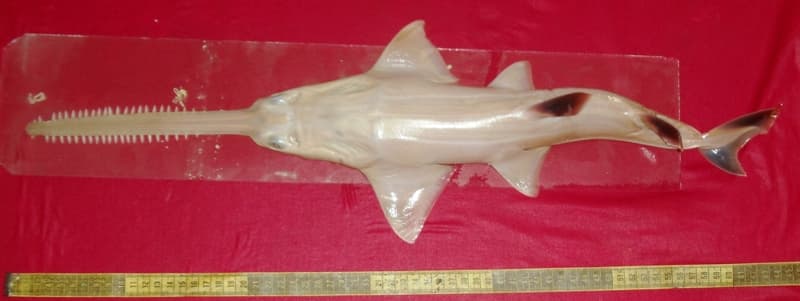
Look at the base of the saw
The section closest to the head lacks rostral teeth, unlike Pristis species. Its teeth are relatively short and flattened. Its scientific name avoids confusion with green sawfish, also sometimes called narrowsnout sawfish.
02
Indo-Pacific coasts
It uses estuaries, bays, river mouths and soft seabeds across the Indo-Pacific. Estuaries are important for young fish. A broad historical range does not establish continued presence at every former location.
03
Size and early maturity
Florida Museum describes lengths around 3.5 metres in Australia and cautions against unconfirmed larger reports. Maturity can occur at two to three years, earlier than in the other species featured here.
04
Fish and cephalopods
NOAA reports fish and cuttlefish as prey but notes limited study. The sensory rostrum helps locate and handle food.
05
Live-born young
Embryos develop on yolk reserves. NOAA reports up to 16 pups, while pregnancy length and reproductive cycles remain incompletely described. Earlier maturity does not make populations immune to fishing pressure.
06
Following movements
The Australian Institute of Marine Science documented tagging two adults in northern waters. Such work can reveal movement and habitat needs to inform protection, though a few tracked individuals do not represent the entire species.
Global conservation status
Critically Endangered
Global IUCN category; local legal classifications may differ.
IUCN SSC Shark Specialist Group · 2024 ↗