01
How to recognise it
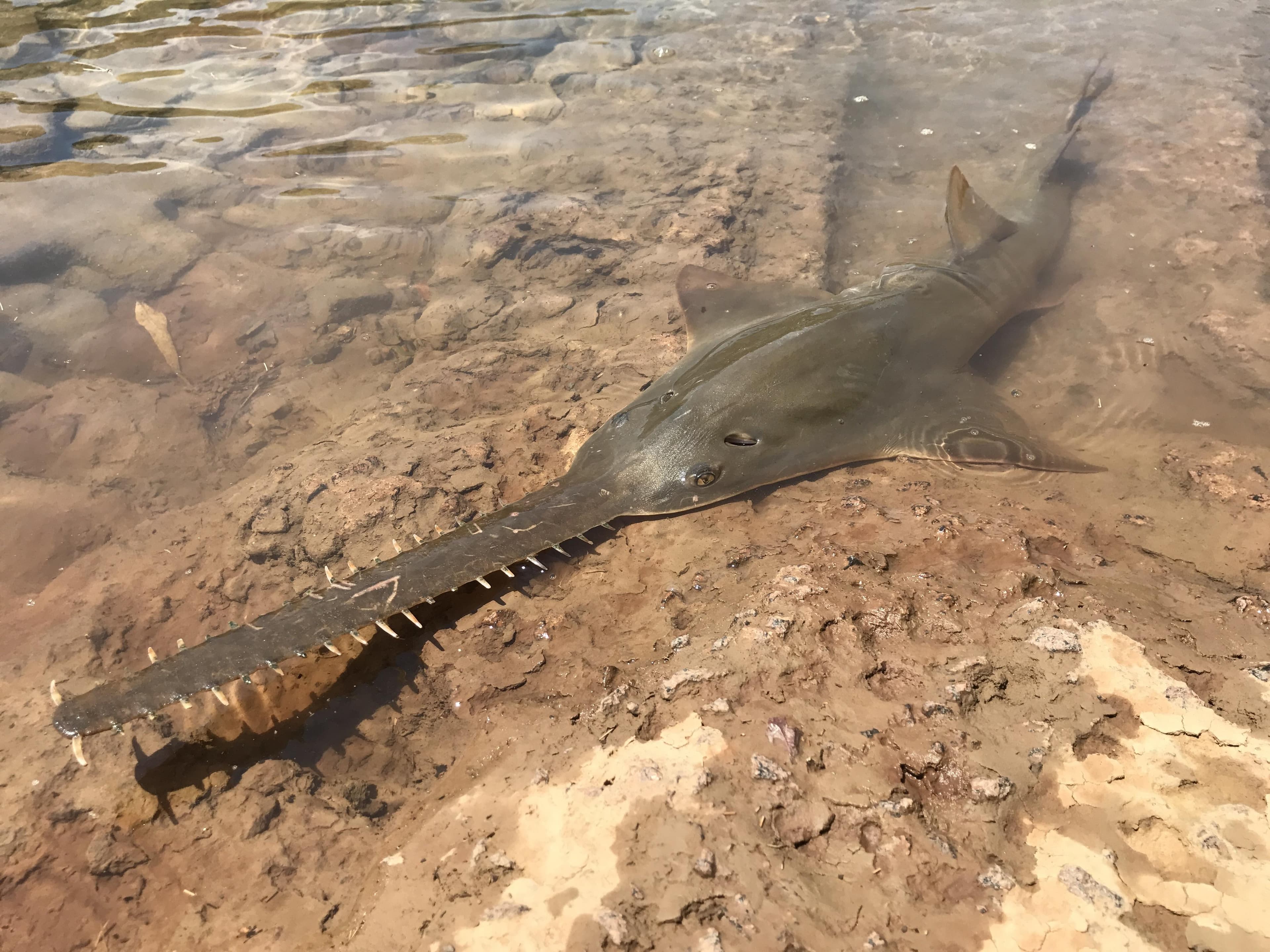
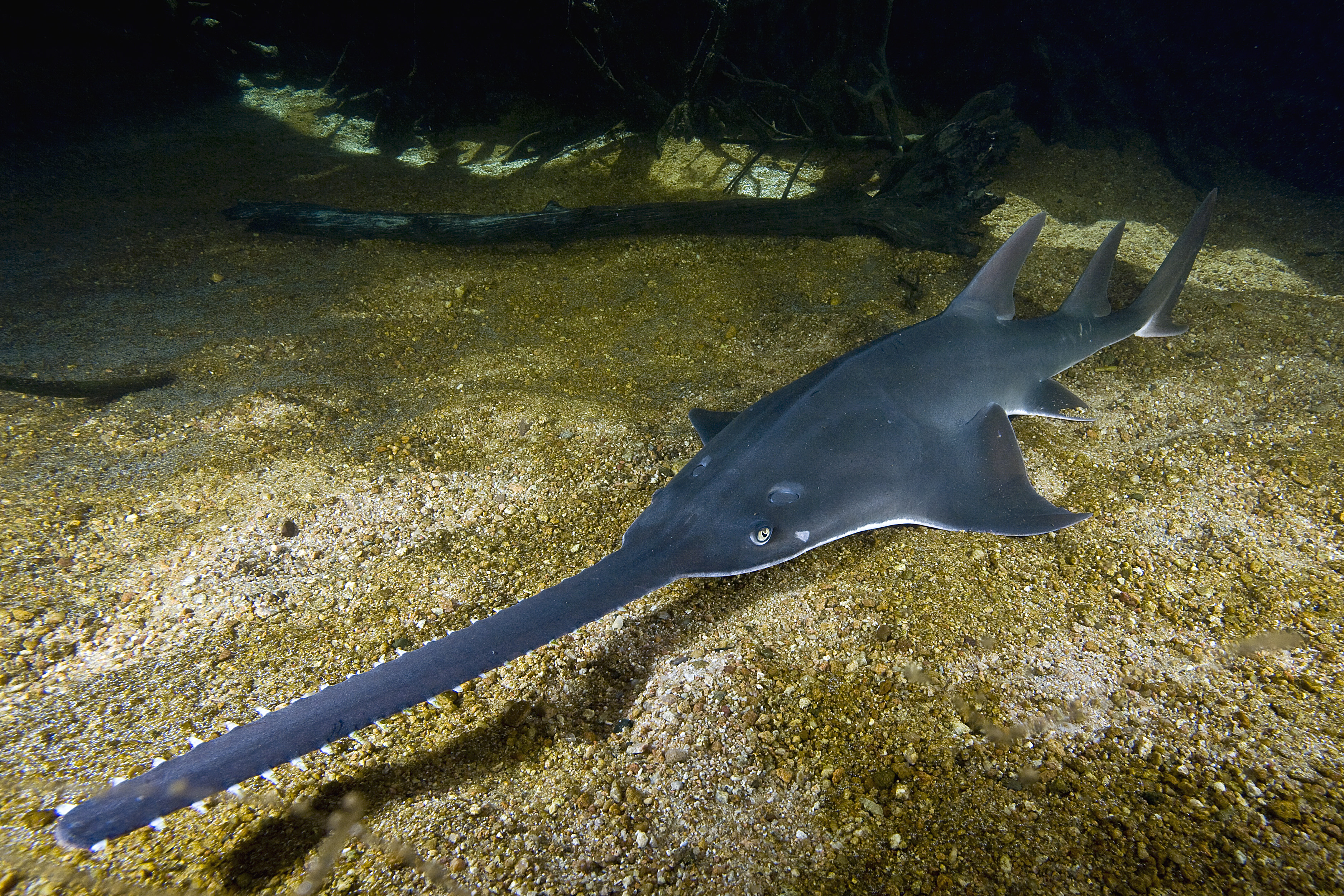
Usually 14–24 teeth line each side of the saw. The first dorsal fin starts ahead of the pelvic fins, and the tail has a distinct lower lobe. Tooth counts overlap among species, so they are not sufficient for identification on their own.
02
Between river and coast
Its once-wide tropical range has contracted severely. Australia and Amazonia retain important populations. Young fish use shallow freshwater refuges; growing animals expand into coastal habitats.
03
Size and growth
NOAA records a maximum just over 7 metres, not a typical adult length. Early growth slows with age. Australian information places maturity at roughly 8–10 years.
04
Food and feeding
Prey includes fish, crustaceans and other invertebrates. Sideways rostrum movements help handle prey before it enters the mouth underneath the head. The saw is not a jaw.
05
Reproduction
Live-born pups develop on yolk reserves. Reported litters contain 1–13 young and births may occur every other year. The roughly five-month pregnancy estimate comes from particular studies, including Lake Nicaragua, rather than every population.
06
Threats to survival
Fishing-gear entanglement combines with river alteration and loss of juvenile habitat. Recovery therefore depends on freshwater systems and connections to estuaries as well as marine protection.
Global conservation status
Critically Endangered
Global IUCN category; local legal classifications may differ.
IUCN SSC Shark Specialist Group · 2024 ↗