
01
Small only by comparison
A dwarf sawfish can exceed three metres. Its relatively short, broad-based saw usually carries 18–24 teeth per side. Overlapping tooth counts mean that other features must also be considered.
02
Shallows and estuaries
Recent records concentrate especially in northwestern Australia. It uses coasts, estuaries and lower river reaches. Kimberley tracking studies recorded shallow water and muddy substrates close to mangroves.
03
Size and age
Florida Museum gives 3.1 metres; NOAA lists roughly 11 feet. NOAA also reports a lifespan of up to 34 years and maturity around eight. These are reference estimates, not fixed measurements for every fish.
04
An understudied diet
Small fish and crustaceans are considered probable prey, but detailed dietary evidence is sparse. Likely food should not be confused with a complete set of confirmed observations.
05
What is known about breeding?
Pups are born alive after developing on yolk reserves. References differ on litter size: NOAA reports up to 13, while Florida Museum describes it as unknown. We therefore avoid treating a single number as settled; gestation is also unresolved.
06
Small habitats with a big role
Accidental capture and habitat degradation threaten its limited populations. Tracking its shallow-water movements helps identify places needing targeted protection, rather than relying only on a broad range outline.
Global conservation status
Critically Endangered
Global IUCN category; local legal classifications may differ.
IUCN SSC Shark Specialist Group · 2024 ↗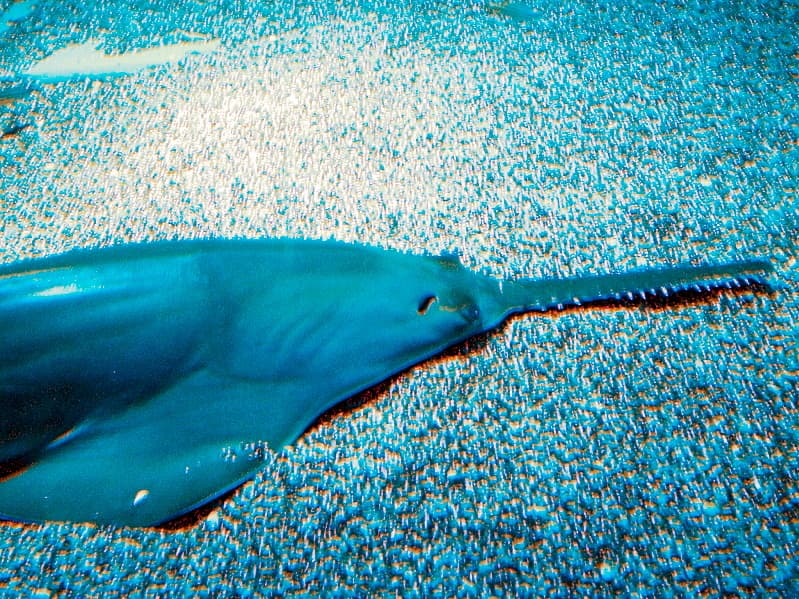
_in_Aqua_park.png)
